


SUMMIT OUTPUTS
From Insight to Action
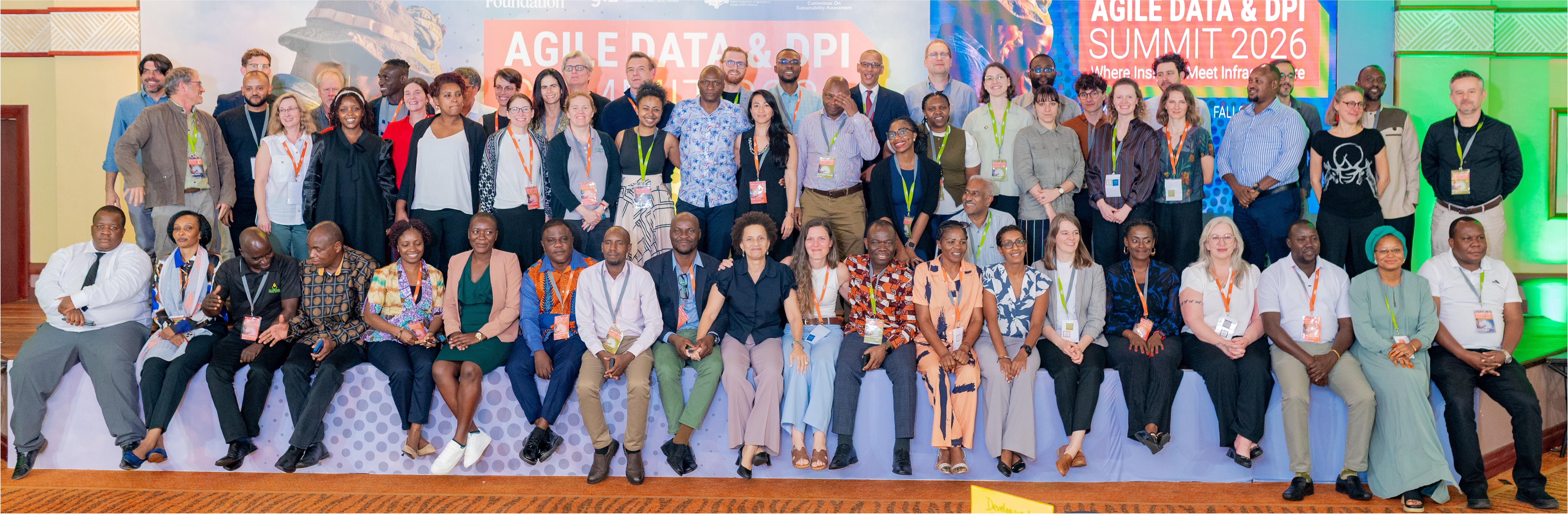
The Agile Data & Digital Public Infrastructure Summit was designed as a working convening — bringing together farmers, policymakers, researchers, system architects, and private sector actors to engage with one central question:
How do we connect agile, farmer-centred data with interoperable infrastructure to deliver real, scalable impact?
Across three days, the Summit followed a deliberate arc:
- Grounding discussion in real-world experience
- Understanding the system-level constraints shaping outcomes
- Moving toward practical alignment and action
- The outcomes below reflect not just what was discussed – but what was learned when ideas were tested against reality.
Stakes & Progress
Connecting insight with infrastructure
How can we connect agile, farmer-centred data with interoperable data exchange infrastructure to deliver real, scalable impact for farmers and sustainable agriculture?
Day 1 set the foundation for the Summit – grounding the conversation in current realities, lived experience, and the strategic decisions now facing the system.
Keynote Address – Data & Infrastructure at a Pivotal Moment

Watch: Data & Infrastructure at a Pivotal Moment
Watch: The Business Case for Agile Data & DPI
Voices from the Field

Farmers and frontline actors brought the system into focus.
Their experiences highlighted a simple but critical truth:
If systems do not work at the farm level, they will not work at scale.
Key insights:
- Data is only valuable when it supports real decisions
- Systems often add burden rather than reduce it
- Trust, usability, and relevance determine whether farmers engage
- Farmer experience is the ultimate test of system design
Bringing Agile Data & DPI Together — What For?

This session established a shared foundation.
It clarified that neither Agile Data nor Digital Public Infrastructure is sufficient on its own — but together, they can enable systems that are both responsive and scalable.
Key insights:
- Agile Data provides timely, grounded insight
- DPI provides the infrastructure for scale and coordination
- Without connection, systems remain fragmented
- With alignment, they can support real-time decision-making across actors
Building on the morning’s insights, participants convened across nine breakout conversations, each tackling a distinct but interconnected challenge — from farmer data wallets and extension systems, to AI use cases, interoperability, and the cost of inaction.
What emerged was a consistent set of themes:
The centrality of farmer trust, voice, and participation
The need to move from fragmented pilots to aligned, interoperable systems
The importance of translating data into tangible value for farmers
The recognition that digital tools must complement — not replace — human systems
Across the sessions, ideas were not only discussed — they were owned. Each group identified concrete actions and, critically, the actors willing to take them forward.
The output reflects a shift:
- From insight → to collaboration
- From discussion → to early-stage solutions
- From individual efforts → to shared responsibility
As captured in the report, these conversations span use cases, conceptual frameworks, and collaboration models, highlighting that technical solutions alone are insufficient without alignment, shared understanding, and coordinated action.
Watch: Bringing Agile Data & DPI Together — What For?
DPI Learning in Practice
This session moved from theory to implementation.
Through country experiences and practical examples, it highlighted what it takes to operationalise digital infrastructure in real conditions.
Key insights:
- Implementation challenges are often institutional, not technical
- Interoperability requires governance, not just architecture
- Systems must be designed for usability, not only compliance
- Learning from practice is essential to avoid repeating failure at scale
Agile Data in Action: Labs

The Agile Data Labs, held on Day 1, grounded the Summit in real-world experience – bringing field-tested insight into how systems actually work, and where they fail.
Convened in collaboration with partners from the Agile Data Project, the Labs drew on extensive field experience in measurement, data systems, and farmer engagement.
Rather than focusing on theory, they translated lived experience into practical design principles.
What emerged across the Labs:
- Engagement is not a technology challenge – it is a design discipline
- Data quality is shaped by behaviour, not tools alone
- Value depends on closing the loop – returning insight to farmers
- Interoperability requires alignment in meaning, not just connection
These insights reflect a broader discipline grounded in long-standing experience in agricultural measurement and systems design:
- Defining what to measure – and why it matters
- Ensuring data is credible, comparable, and grounded in reality
- Embedding farmer-centred design into measurement systems
- Connecting data to decisions – not just reporting
Across all Labs, one principle stands:
- Data is not an output. It is infrastructure for decision-making.
- Explore Lab Output Summaries
 Consolidated Agile Data Lab Report